
Monero Privacy When Exchanging XMR: What It Protects and Where It Stops
Temporary publishing capability check
September 14, 2026Casino on-line: registration, titles and payment alternatives
September 14, 2026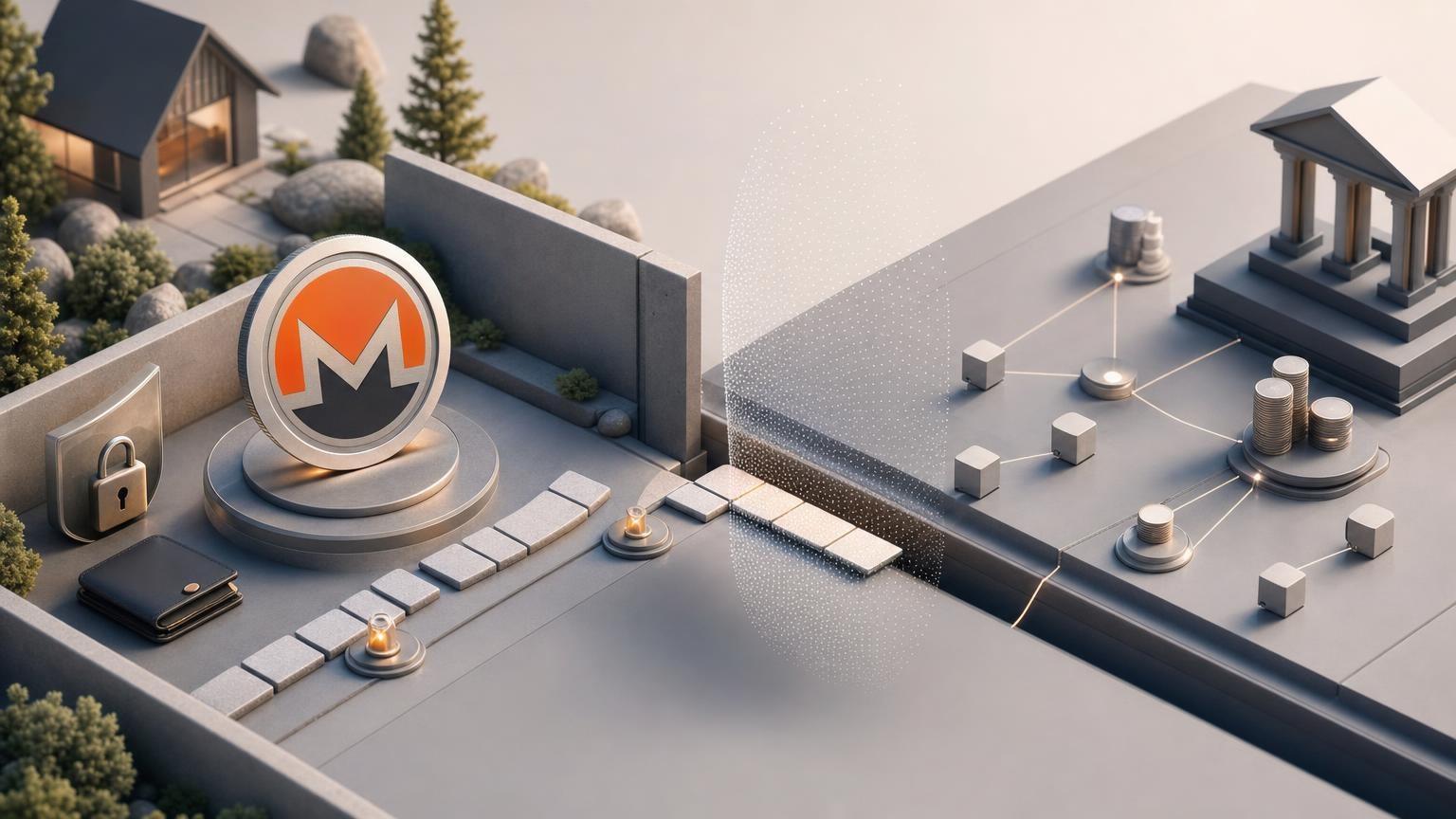
Monero protects transaction details recorded on its blockchain, but an XMR exchange involves more than the blockchain. The exchange service can still see the order information it receives, while wallet software, remote nodes, network providers, and the destination platform may observe other parts of the operation. The useful question is therefore not whether an exchange is “anonymous,” but which participant can see each piece of data.
Key conclusions
- Monero hides the transferred amount, recipient address, and true spent output from ordinary public blockchain observers through several complementary protocol mechanisms. [1]
- Those protections do not erase information submitted directly to an exchange, including the selected direction, destination details, order identifier, and any information required by applicable compliance procedures.
- A transaction ID can show that a Monero transaction exists and has been confirmed, but it does not publicly reveal the payment amount or destination. A payment proof requires additional information deliberately provided by the sender. [2]
- Using an untrusted remote node can expose network metadata even though the blockchain transaction remains cryptographically private. [3]
- Privacy is strongest when address hygiene, wallet configuration, device security, network access, and careful handling of order data support the protocol rather than undermine it.
The minimum concepts needed to understand XMR privacy
Stealth addresses protect the recipient on the public ledger
A sender’s wallet creates a one-time destination for each Monero payment. As a result, the recipient can provide a reusable public address while the blockchain records distinct one-time outputs that are not publicly connected to that address. The sender and recipient can recognize the payment, but an ordinary observer cannot read the recipient’s published address from the transaction. [1]
This matters when receiving XMR after an exchange: someone looking only at the blockchain cannot simply search for the wallet address entered in the order and find its balance or transaction history.
Ring signatures obscure the true spent output
When XMR is spent, the protocol combines the real input with decoy outputs in a ring signature. An outside observer sees a set of possible inputs rather than a public declaration of which output was actually spent. Monero’s documentation describes sender privacy as probabilistic or based on plausible deniability, which is more precise than claiming that tracing is mathematically impossible under every condition. [4]
RingCT hides transaction amounts
Ring Confidential Transactions conceal the amounts transferred while still allowing the network to verify that the transaction follows the monetary rules. Public observers can see that a transaction was recorded, but not how much XMR moved between its outputs. [5]
The exchange receiving a deposit is in a different position. Its wallet can detect the amount paid to an address it controls, and its order system can associate that payment with the corresponding request. Blockchain confidentiality does not prevent the recipient from recognizing its own funds.
Subaddresses reduce reuse outside the blockchain
Monero documentation recommends subaddresses as the default way to receive payments. Providing a fresh subaddress can prevent a payer from trivially recognizing the same destination address in later payments. It does not help when an account or service database already connects several payouts to the same customer or order history. [6]
View keys and transaction proofs provide selective visibility
A private view key can reveal incoming transactions associated with a wallet and should not be treated as ordinary public information. Separately, a sender can use transaction-specific proof data to demonstrate that a particular transaction paid a particular address. These tools make Monero selectively auditable, but disclosure expands what the recipient or verifier can learn. [7]
Mechanism map: from an exchange order to a verifiable result
| User action | Service or wallet mechanism | Network or protocol effect | Observable result and check |
|---|---|---|---|
| Select an available direction involving XMR and enter the requested destination details. | The service creates an order and stores the information needed to process it. The order exists outside the Monero protocol. | No Monero transaction has occurred yet. | Check the asset, direction, address, network requirements, and current verification conditions before sending funds. |
| Send XMR to the deposit address supplied for the order. | The wallet constructs the transaction, selects inputs and decoys, creates one-time outputs, and conceals amounts. | The transaction is broadcast and may first enter the transaction pool before being included in a block. | The wallet should show a transaction ID and its state. A transaction ID alone does not publicly expose the recipient or amount. [8] |
| Wait for the service to detect and accept the deposit. | The service’s wallet scans the blockchain using its own keys, recognizes the output intended for it, and associates the received amount with the order. | Additional blocks increase the transaction’s confirmation count. | Compare the wallet status with the order status. A public explorer may show inclusion and confirmations, but it cannot independently reveal the private payment details. |
| Receive the output asset at the destination provided in the order. | The service processes the exchange under the applicable order and compliance conditions, then initiates the outgoing transfer. | The outgoing transaction follows the privacy model of its own blockchain, which may be substantially more transparent than Monero. | Verify receipt in the destination wallet using the appropriate network’s transaction record. Do not assume that Monero’s privacy properties carry over to another asset. |
| Resolve a disagreement about an XMR payment if necessary. | The sender may produce a payment proof or transaction key, depending on the wallet and available transaction data. | The verifier checks the proof against the transaction, address, and current blockchain state. | A valid proof can establish that an amount was paid to the specified address, although it does not necessarily prove that those funds remain spendable. [2] |
A realistic XMR exchange scenario
Suppose a user wants to exchange XMR for another supported asset. Before creating the order, the user checks that the required pair and transfer direction are currently available; support for both assets does not automatically establish that every pair, network, or direction is offered.
The service provides an XMR deposit address and requests a destination address for the output asset. The user verifies both fields directly in the wallet and sends XMR. On the Monero blockchain, outside observers cannot publicly read the deposited amount or the service’s standard receiving address from the transaction. The service can nevertheless recognize the payment because it controls the receiving wallet, and it can associate that payment with the order it created.
Once the exchange is processed, the output transaction follows the rules of the destination network. If that network exposes addresses and amounts publicly, observers may see those details even though the incoming XMR transaction remains opaque. Timing, an exact externally known amount, reused destination addresses, account records, or information disclosed elsewhere could also help an observer form a hypothesis about the relationship between the two transfers. Such a hypothesis is contextual evidence, not a direct disclosure by the Monero ledger.
If the XMR deposit appears confirmed in the sender’s wallet but is not reflected in the order, the user should preserve the transaction ID and order identifier. A transaction proof may help demonstrate payment to the supplied address, but the transaction key, proof data, private view key, and wallet seed are not interchangeable. In particular, the seed and private spend key should never be disclosed to prove a payment.
Where the privacy model applies—and where it does not
What Monero can conceal from public blockchain observers
Under normal protocol operation, a person inspecting the public ledger cannot directly read the sender’s wallet address, the recipient’s published address, or the transferred amount. The observer can still see that a transaction exists, its size, its inclusion in a block, its fee-related public data, and the ring members used by its inputs. The true input is obscured among the ring members rather than removed from the transaction structure. [4]
What the exchange can know
An exchange can know the information necessary to execute the order: the selected assets, its own deposit address, the amount its wallet received, the output destination supplied by the user, timestamps, order status, and communications related to the request. If verification is required for that direction or triggered by compliance checks, additional information may be requested. The current requirements should be checked before creating an order.
Monero does not encrypt data that a user types into a service interface or sends to customer support. It also cannot control how a service retains, protects, or lawfully discloses its internal records.
What a wallet connection may expose
A wallet connected to a third-party remote node sends requests through infrastructure controlled by someone else. Official Monero documentation warns that a malicious provider may attempt to associate IP addresses with transaction IDs or provide manipulated information. Running a local node removes reliance on a third-party remote node for blockchain access, while Tor or I2P can address some network-level exposure when correctly configured. Monero’s protocol documentation also makes clear that IP protection is not automatic in every wallet configuration. [3]
What cannot be concluded from a hidden blockchain amount
A private ledger does not prove that no one knows who exchanged the funds. It does not prove that the device is secure, that a browser session is unlinkable, that an email address was not reused, or that the counterparty keeps no records. It also does not guarantee that statistical analysis, compromised endpoints, voluntarily shared proofs, or off-chain information can never narrow the set of possible participants.
Likely failure points and their observable signs
The wrong address or incompatible destination
Cryptocurrency transfers are generally not reversible after confirmation. A mistyped or substituted address may therefore send funds to an unintended recipient. Monero’s official payment guidance states that confirmed transactions cannot be reversed by the network. [8]
- Warning sign: the address displayed by the wallet differs from the address shown in the order.
- Check: compare the full address or several sections at both ends, confirm the address type is accepted, and obtain payment details from the active order rather than an old message.
- Privacy consequence: copying an address through an untrusted page, messenger, or clipboard tool may expose or alter it before Monero’s privacy mechanisms are involved.
The deposit is sent for an expired or mismatched order
A valid on-chain transaction does not by itself prove that all exchange conditions were satisfied. The deposit may use the wrong order address, arrive under changed order conditions, or differ from what the service expects.
- Warning sign: the wallet shows confirmations while the order remains unmatched.
- Check: compare the deposit address and transaction ID with the active order record, then use the service’s documented support process if they match.
The transaction remains pending or the wallet is out of sync
A wallet may show a transaction as pending while it waits for block inclusion. A delayed interface can also reflect incomplete synchronization rather than a privacy failure. The wallet’s transaction state and confirmation count are more useful diagnostics than the absence of publicly readable payment details. [8]
- Warning sign: the transaction has no block height or the wallet reports that it is still pending.
- Check: confirm that the wallet is synchronized and connected to a functioning node before assuming the recipient has rejected the payment.
A remote node becomes an unintended observer
- Warning sign: the wallet uses an unknown public node over a direct connection.
- Check: review the wallet’s node settings and decide whether a local node, a trusted node, or privacy-preserving routing is appropriate for the threat model.
- Limit: routing tools do not correct phishing, malware, account identification, or information already disclosed to the exchange.
Address reuse links activity inside a service database
A fresh subaddress can reduce recognition by a payer, but it cannot separate transactions that the same logged-in account or exchange profile already groups together. Monero documentation explicitly notes that account-level service records can link payouts regardless of the use of different subaddresses. [6]
Phishing bypasses protocol privacy
A convincing fake order page can collect addresses, order data, credentials, or recovery information before any transaction reaches the network. Never provide a wallet seed, private spend key, or full wallet backup to create, trace, accelerate, or refund an exchange. Those secrets grant control over funds; they are not ordinary support data.
How to approach an XMR exchange carefully
- Confirm that the required XMR pair, direction, and destination network are currently available.
- Read the current verification conditions before creating the order; they can vary by direction and compliance results.
- Use payment details generated for the active order and verify the complete destination address in the sending wallet.
- Check whether the wallet uses a local, trusted, or unknown remote node, and understand what network metadata that choice may expose.
- Keep the order identifier and transaction ID until both sides of the exchange are complete.
- Check the outgoing asset in its own wallet and network. Do not expect another blockchain to inherit Monero’s hidden amounts or addresses.
- Do not disclose the seed, private spend key, or private view key in routine support correspondence. Share transaction-proof information only when its purpose and disclosure consequences are understood.
- Account for price volatility while an operation is being prepared or processed, without assuming a fixed outcome that has not been stated in the order conditions.
After reviewing these boundaries and confirming current availability, the practical next step is to check an exchange direction involving XMR and read its applicable conditions before creating a request.
Understanding checklist
After working through this model, a reader should be able to:
- explain why a public Monero transaction does not display its recipient and amount;
- distinguish information hidden on-chain from information supplied directly to an exchange;
- describe how stealth addresses, ring signatures, and RingCT protect different parts of a payment;
- recognize why an exchange can detect its own XMR deposit despite Monero’s opaque public ledger;
- check transaction state and confirmations without expecting an explorer to reveal private payment details;
- identify when a payment proof may resolve a dispute and why such proof should be shared selectively;
- inspect whether an untrusted remote node adds network-level exposure;
- understand that the output asset has its own privacy model;
- spot address substitution, phishing, synchronization problems, mismatched orders, and improper requests for wallet secrets;
- avoid treating protocol privacy as proof of complete anonymity across the entire exchange process.